GEOGRAPHICAL INDICATION (GI Tag)

Document the connection between a product and its place.

Organise a geographical indication application around the goods, producer community and evidence that links their qualities or reputation to a defined region.
  • Evidence-led preparation
  • Producer-focused scope
  • Clear application route

Local evidence

Gather records ofthe regional link.

Producer scope

Define the groupyou represent.

Discuss a GI requirement.

Tell us what you need and the stage you have reached. We’ll help identify the information and next steps for your case.
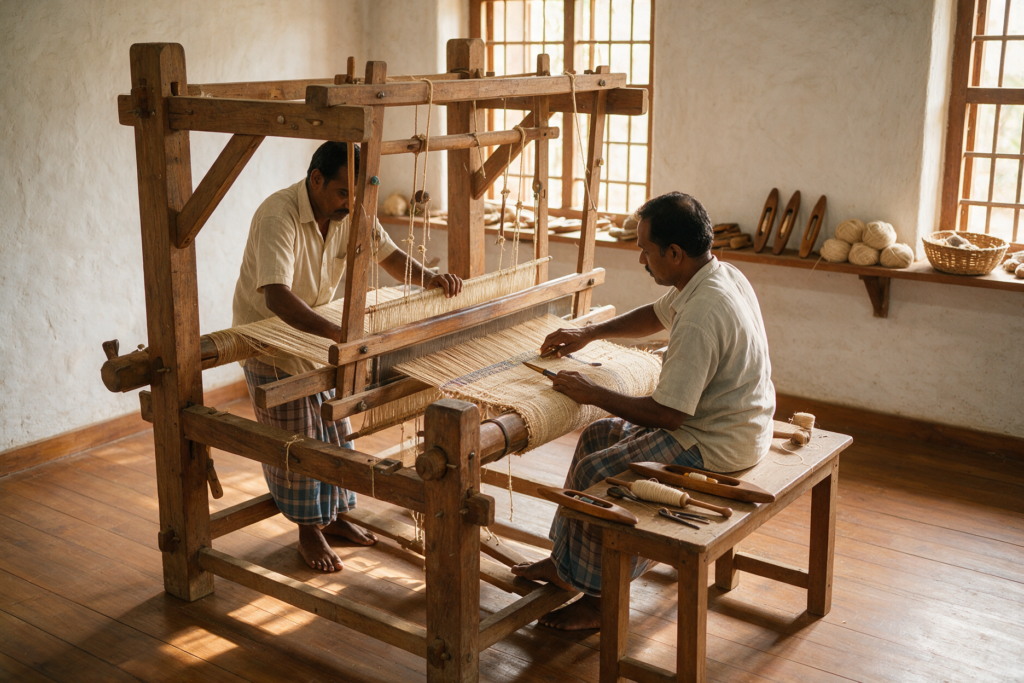
Textile artisans working together at a handloom

UNDERSTAND YOUR FILING

Start with the producers and the regional evidence.

A geographical indication is not simply a business name or a label saying where a product was made. The application needs a substantiated connection between the goods and their geographical origin. We help organise the proposed applicant’s records, producer information and supporting evidence into a clear preparation plan.

PLAN THE RIGHT SUPPORT

Choose support for the stage you have reached.

New GI application preparation

Organise the goods, geographical area and supporting case for registration.

Producer documentation review

Bring together the applicant’s representative role and producer information.

Authorised-user application support

Review a producer’s application in relation to an already registered GI.

A clearer starting point for your application.

Evidence-led preparation

Identify the records needed to support the regional connection.

Producer-focused scope

Clarify whose interests the applicant represents.

Clear application route

Distinguish GI registration from authorised-user registration.

Check the foundation before you file.

The right route depends on the applicant, subject matter and existing records.

Representative applicant

An association, organisation or qualifying authority must represent the interests of the relevant producers.

Geographical connection

The goods need the required link between their quality, reputation or characteristics and origin.

Authorised-user route

A producer of goods covered by a registered GI may seek registration as an authorised user.

Share relevant earlier filings and disclosures at the outset so the requirements can be assessed for your case.

Who this support is for.

Start with your objective and the work already completed.

  • Producer associations and cooperatives
  • Organisations representing regional craft communities
  • Eligible producers seeking authorised-user status

Prepare the information for your first review.

  • Applicant constitution and representative-authority records
  • Identification and description of the goods
  • Map and definition of the geographical area
  • Evidence supporting the claimed quality, reputation or origin link
  • Producer particulars and production information
  • Registered GI details for an authorised-user application

This is a starting checklist. The final documents depend on your filing route. Use the enquiry form for a high-level summary rather than confidential technical material.

Know what happens at each stage.

01

Confirm the route

Identify whether the requirement concerns a new GI or an authorised user.

Stage 1

02

Map the evidence

Review the goods, region, producers and supporting materials.

Stage 2

03

Prepare the application

Organise the statement and prescribed filing particulars.

Stage 3

04

Respond to review

Address examination requirements and track the relevant procedural stages.

Stage 4

05

Plan registration upkeep

Review the registration outcome and applicable renewal requirements.

Stage 5

The applicable authority decides the outcome. Filing support does not guarantee registration or grant.

Plan around the actual milestones.

Evidence gathering:

Community records and supporting research determine preparation time.

Registry procedure:

Examination, publication and any opposition affect the overall schedule.

Renewal planning:

GI registration runs for ten years and may be renewed under the prescribed process.

MAKE AN INFORMED CHOICE

GI registration and authorised-user registration serve different roles.

QuestionGI registrationAuthorised-user registration
Who applies?

A qualifying body representing the producers.

An eligible producer of the registered GI goods.

What is established?

The registered indication and its relationship to the goods and region.

The producer’s recorded status in relation to the registered GI.

Starting information

Regional evidence and representative producer records.

Existing GI details and evidence concerning the producer.

A GI should not be presented as an exclusive private brand registration for one trader.

WHY TRADE INNOVATION

Practical preparation. A clear next step.

Bring your objective and available records. We’ll help organise the application discussion around your circumstances.

Case-specific checklist

Identify the information your chosen route needs.

Defined scope

Understand the preparation, filing and follow-up work included.

Clear coordination

Keep the documents and next actions organised.

Textile artisans working together at a handloom

CLIENT EXPERIENCES

EXPLORE RELATED IP SUPPORT

Plan protection for your other business assets.

Questions about geographical indication (gi).

Understand the scope before deciding how to proceed.
Can a single business treat a GI as its own private brand?

A GI registration concerns goods linked to origin and the interests of the relevant producers. It is different from registering an individual business trademark.

What is an authorised user?

An eligible producer can apply to be registered as an authorised user of an existing registered GI.

Why is a map needed?

The application must identify the geographical area associated with the goods. The boundary should match the supporting evidence.

Can GI registration be renewed?

Yes. GI registrations can be renewed for further ten-year periods through the prescribed process.

Can you quote a fixed completion date?

No. Evidence gathering, examination and any opposition make the timeline case-dependent.

Discuss a GI requirement.

Tell us your objective and current stage. We’ll help identify the next step.